Gonio-Apsaros: a Roman fort at the mouth of the Chorokhi
A rectangle of walls fifteen kilometres south of Batumi, with Roman, Byzantine and Ottoman layers in a single masonry.
100
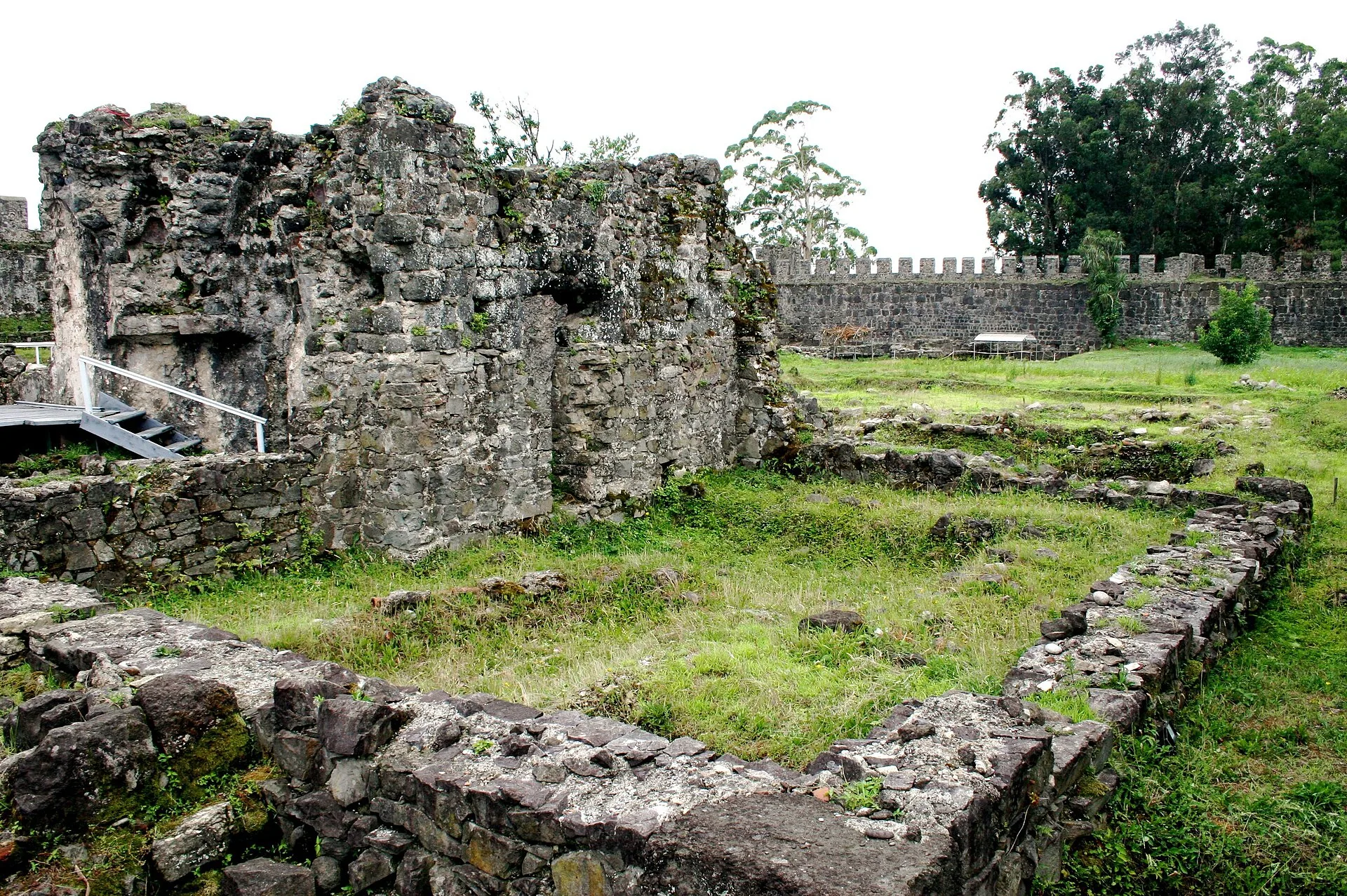
The fortress of Gonio stands on the left bank of the Chorokhi, right at its mouth, fifteen kilometres south of Batumi and a few kilometres from the Turkish border. In antiquity the place was called Apsaros. The Greeks tied the name to the myth of Medea and her brother Apsyrtus, and Arrian wrote that the locals would point out his grave. The earliest mention comes from Pliny the Elder in the first century AD, and by the second century it was a well-fortified Roman town with a theatre and a hippodrome.
In plan the fortress is a rectangle, two hundred and twenty-eight metres long and one hundred and ninety-five wide, with towers along the circuit, eighteen of which survive. Several building phases show in the walls. The lowest is laid in large, carefully dressed blocks; above it come Byzantine additions of the sixth and seventh centuries; and the topmost course of river cobbles dates from the mid-sixteenth century, when the Ottomans took the fortress.
The name Gonio first appears in the fourteenth century, in the work of the Trapezuntine historian Michael Panaretos. For a time the Genoese kept a trading post here. In 1547 the fortress was taken by the Ottoman Empire, which held it until 1878, when Adjara passed to Russia. Church tradition holds that the apostle Matthias is buried at Gonio, but no excavation is carried out at the supposed grave. Since 1995 the Roman layers have been studied by the Gonio-Apsaros archaeological expedition.