Batumi: the free-port years and Baku oil
Eight years of duty-free trade, a railway from Baku and oil turned a small Ottoman harbour into Russia's chief oil port on the Black Sea.
1878
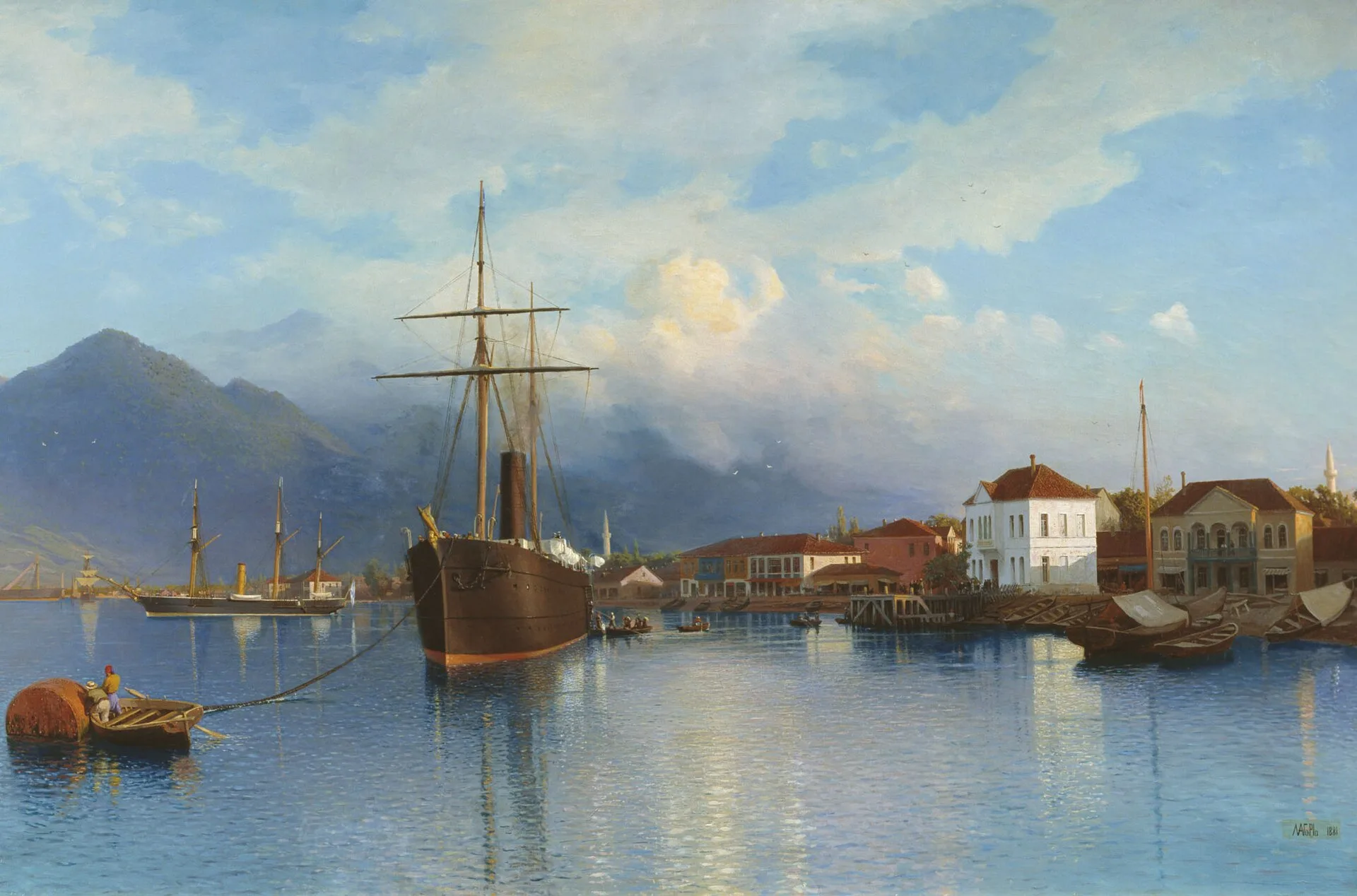
Until 1878 Batumi was a small provincial port of the Ottoman Empire. After the Russo-Turkish War of 1877–1878 the town, together with Adjara, passed to the Russian Empire, and Russian troops entered it in August 1878. The port was declared a porto franco, a free harbour into which goods came without customs duties. That status lasted until 1886.
The real turning point was the railway. In 1883 a line linked Batumi with Tbilisi and Baku, and Baku oil began to reach the world market through the town. Storage tanks and quays were built, and the Nobel and Rothschild firms took part in the trade. In 1907 a pipeline from Baku to Batumi opened, and the town became Russia's chief oil port on the Black Sea.
The population grew with the port. In 1882 about eight and a half thousand people lived in the town, in 1889 twelve thousand, and by 1902 sixteen thousand, a thousand of them working at the plant of the Rothschilds' Caspian and Black Sea Oil Company. In March 1902 the workers of Batumi came out in a large strike and demonstration. Former Batumi workers soon found themselves at the head of the peasant movement in neighbouring Guria.