David IV the Builder
King of Georgia, the unifier
1073–1125
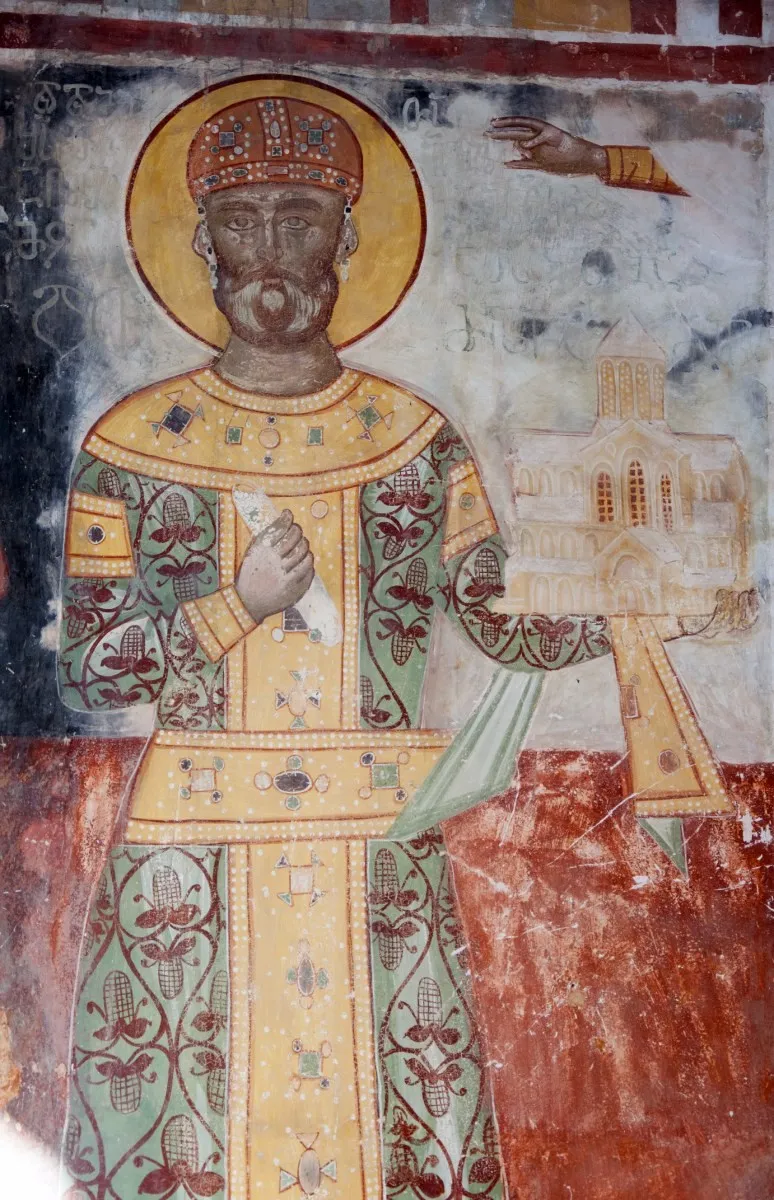
David IV the Builder (about 1073–1125) was born in Kutaisi and at about sixteen, in 1089, took the throne from his father George II. The country he inherited had shrunk to Abkhazia and Kartli: since 1080 it had been ravaged by Seljuk raids, and Georgia paid them tribute. David rebuilt the army, drove off the raiders and in 1099, when the Seljuks were distracted by the First Crusade, stopped paying tribute.
At home he tamed the rebellious nobility and strengthened royal power. A church council at Ruisi-Urbnisi in 1103 set about reforming the Church, and the core of the army became the king's personal guard, the monaspa. In 1104 David regained Kakheti and Hereti, and in 1118 he settled about forty thousand Kipchak families in Georgia, each obliged to provide a soldier. On 12 August 1121 at Didgori his army routed a far larger Seljuk-led coalition, and in 1122 he took Tbilisi and made it the capital again. Shirvan followed, and so did Armenian Ani, whose people opened the gates to him themselves.
In 1106 David founded the Gelati Monastery, and the chronicler called its academy “a second Athens”. Around 1120 the king himself wrote the “Hymns of Repentance”, eight psalms in free verse. He died in Tbilisi on 24 January 1125. By tradition he was buried at the main gate of Gelati so that everyone entering would step on his slab. He was never formally canonised, yet both the Georgian Church and the people revere him as a saint, and the epithet “the Builder” became customary in the 17th and 18th centuries.