Giorgi Eristavi
Founder of the new Georgian theatre
1813–1864
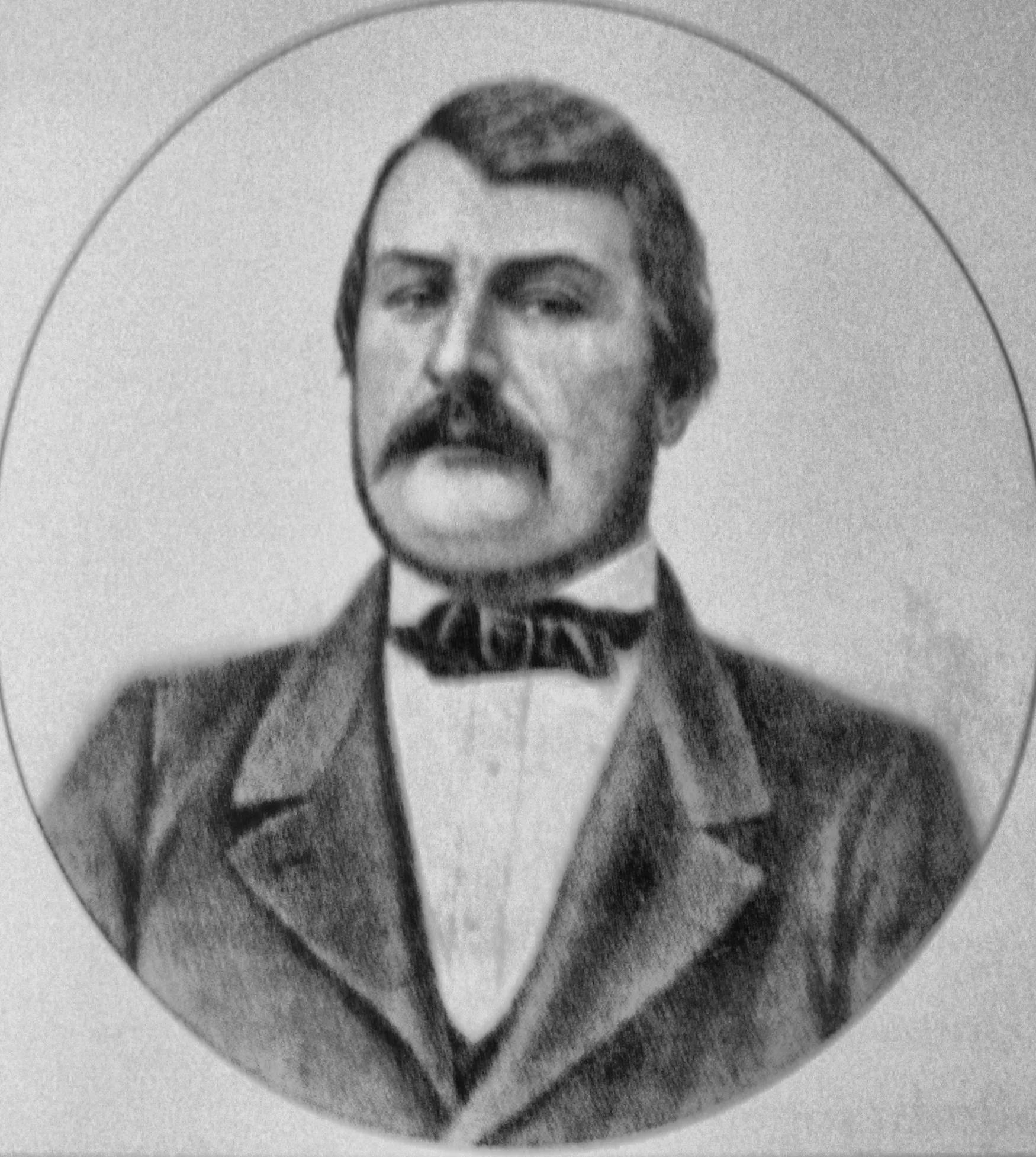
Prince Giorgi Eristavi (1813–1864) was born in the village of Odzisi near Dusheti, into a family that had once served the kings of Georgia as eristavis of Ksani, and studied in Tiflis and Moscow. His first poem, “An Ossetian Tale”, about ill-fated lovers against the background of the struggle of Georgian and Ossetian mountaineers against the armies of Shah Abbas, appeared in 1832. That same year he was caught up in the investigation of the plot against Russian rule: a year in prison and four years as an exiled soldier in Wilno. There he learned Polish, saw the European stage and Mickiewicz's Romanticism, and came home with the idea of a theatre in the Georgian language.
In 1842 he returned to Georgia for good, married and entered the civil service, soon becoming assistant to the viceroy Mikhail Vorontsov. Under the patronage of this liberal viceroy he took charge of the Tiflis theatre, silent since 1795. Eristavi almost single-handedly put together a company, which first faced the public on 1 January 1851 and later played in a new building on the city's central square. He also wrote its plays and took the leading parts himself: his satires “The Lawsuit” and “The Partition” spared neither the decaying Georgian nobility nor the corrupt Russian official nor the moneylender.
He founded and edited the literary journal “Tsiskari”, twenty-four issues, and under the pen name Glukharich wrote the first Georgian literary reviews. After Vorontsov left in 1854, Eristavi had to give up the theatre and settled in Khidistavi near Gori. His pupil Ivane Kereselidze kept the company going for two more years, and in 1856 the theatre closed; the next birth of the Georgian stage came only in 1879. In 1862 Eristavi travelled to London to look at machinery. He died in Gori in 1864 and is buried at the Ikorta church.