Lado Gudiashvili
Painter
1896–1980
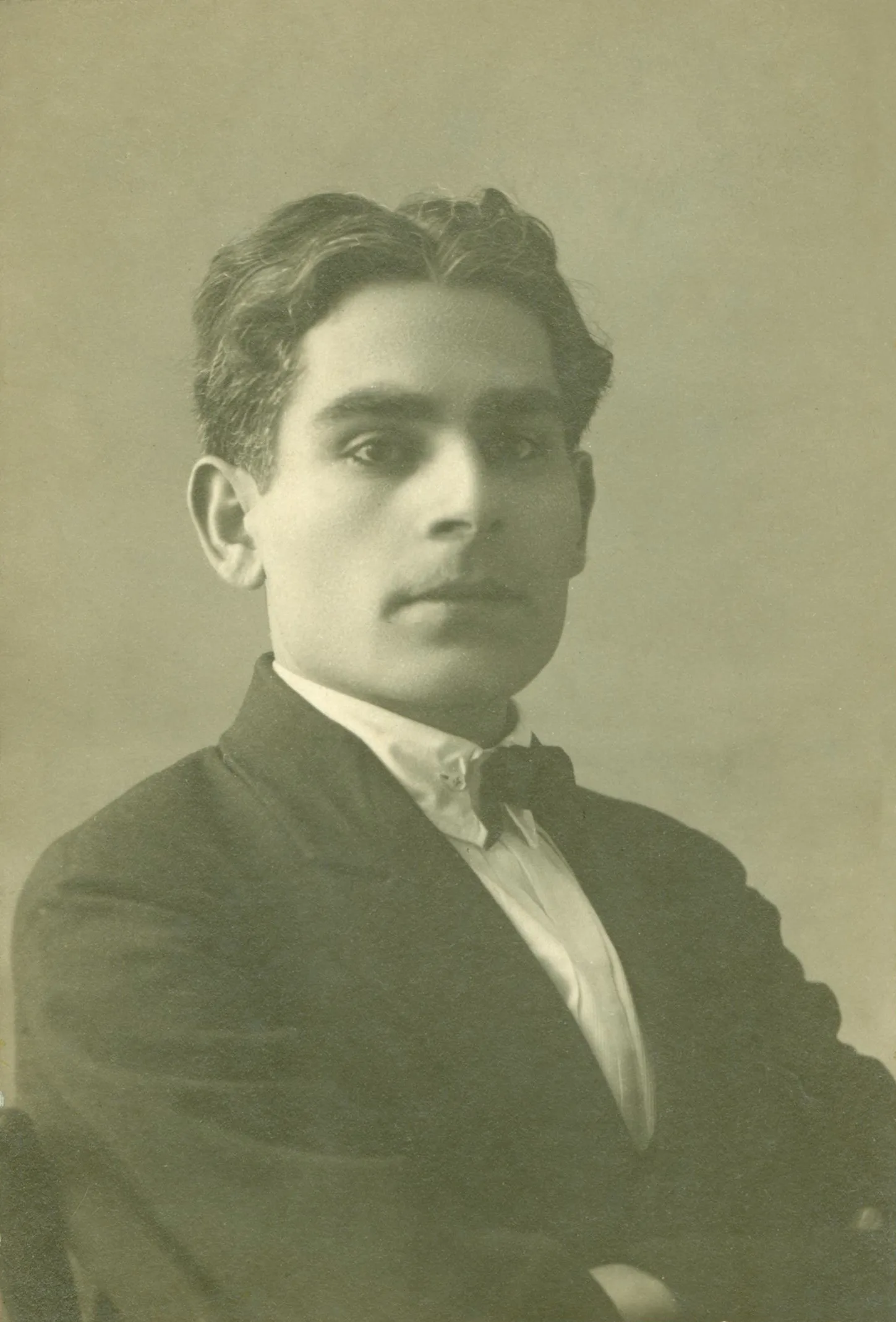
Lado Gudiashvili (1896–1980) was born in Tiflis to a railway worker's family and from 1910 to 1914 studied at the Tbilisi school of painting and sculpture. From 1914 to 1918 he was close to the Blue Horns, poets who sought to join the Georgian character to French Symbolism, and he kept that closeness to poetry all his life.
In 1919 he left for Paris, studied at Ronson's private academy and frequented La Ruche, where he met Modigliani and other painters of the School of Paris. The strongest influence on him, however, was Pirosmani. In 1926 Gudiashvili returned to Georgia and his colours grew warmer: he painted his fantastical world of languid peris, feasts and animals, often drew on opera, ballet and theatre, and himself called it “the world as a theatre”. From that year he taught at the Academy of Arts.
In 1946 he repainted the Kashveti Church in Tbilisi, for which he was expelled from the Communist Party and dismissed from the academy. His late ink drawings earned him the nickname “the Georgian Goya”. Recognition came later: in 1965 he received the Shota Rustaveli Prize, in 1972 he was named People's Artist of the USSR, in 1976 Hero of Socialist Labour, and to the end of his life he remained Tbilisi's best-loved painter.