Ketevan the Martyr
Queen of Kakheti, holy martyr
c. 1560–1624
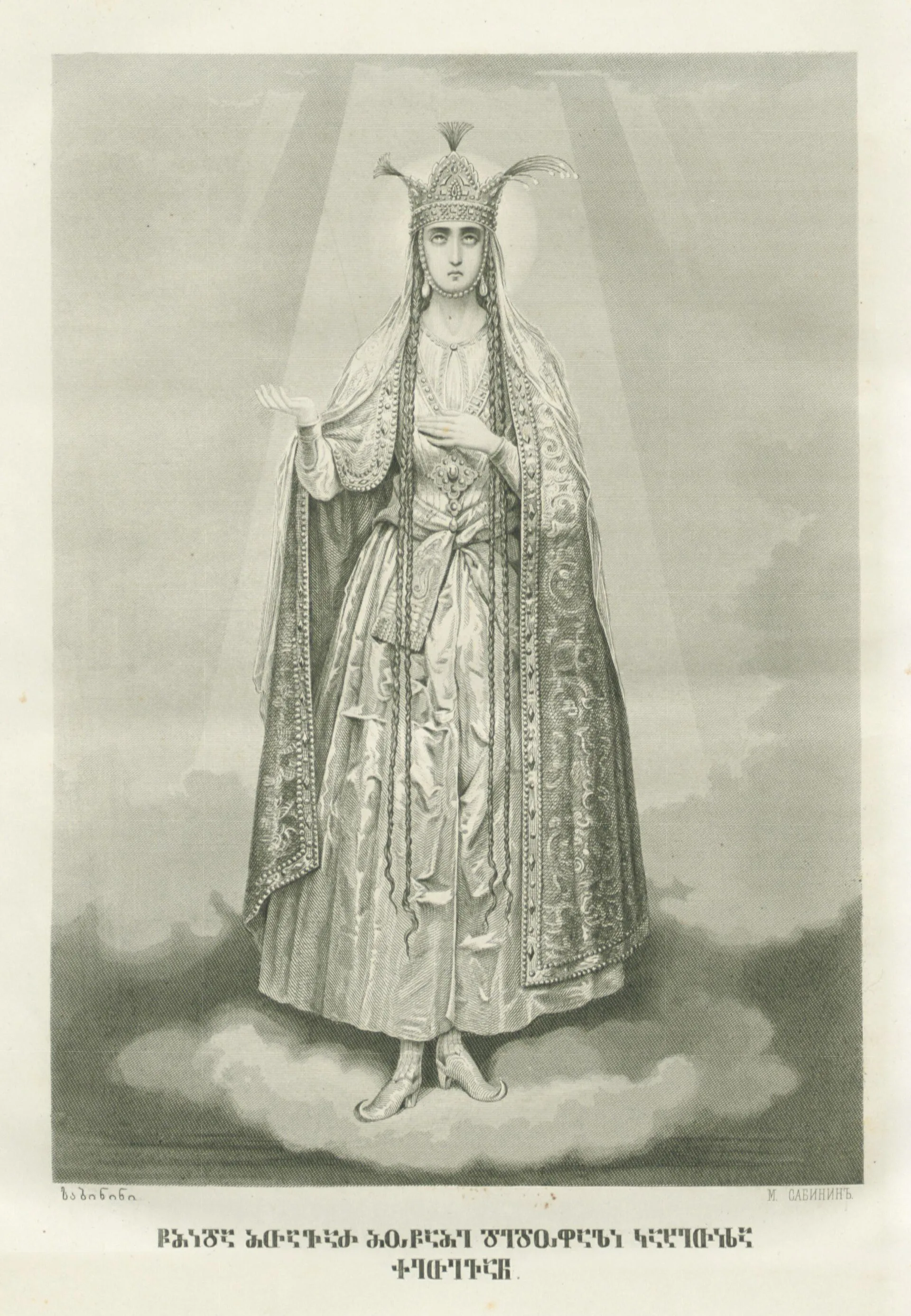
Ketevan came from the Mukhrani branch of the Bagrationi and was the daughter of Prince Ashotan I of Mukhrani. She married Prince David, who became king of Kakheti in 1601, but her husband died a year later and Ketevan devoted herself to church building and charity. In 1605 David's brother Constantine I, backed by Iran, killed his own father and seized the throne.
Ketevan rallied the nobles, defeated Constantine's supporters and ruled Kakheti as regent for her young son, Teimuraz I, until 1614. That year she went to Shah Abbas I as her son's envoy to avert a Persian invasion of Kakheti and in effect gave herself up as an honorary hostage. She was held for years in Shiraz.
Angered by Teimuraz's defiance, the shah demanded that she renounce Christianity. Ketevan refused, and in 1624 she was tortured to death with red-hot pincers. Augustinian missionaries who witnessed the execution secretly took some of her relics to Georgia, where they were buried at Alaverdi, and the rest, they said, ended up in the Church of St Augustine in Goa. In 2004 a chapel matching the Portuguese accounts was found there. Her son Teimuraz wrote the poem “The Book and Passion of Queen Ketevan” in 1625, and the German poet Andreas Gryphius dedicated the tragedy “Catharina von Georgien” to her. The Georgian Church venerates her as a holy martyr.