David IV the Builder: a fresco portrait
David IV (1089–1125) defeated the Seljuks at the Battle of Didgori in 1121 and liberated Tbilisi, opening the Golden Age.
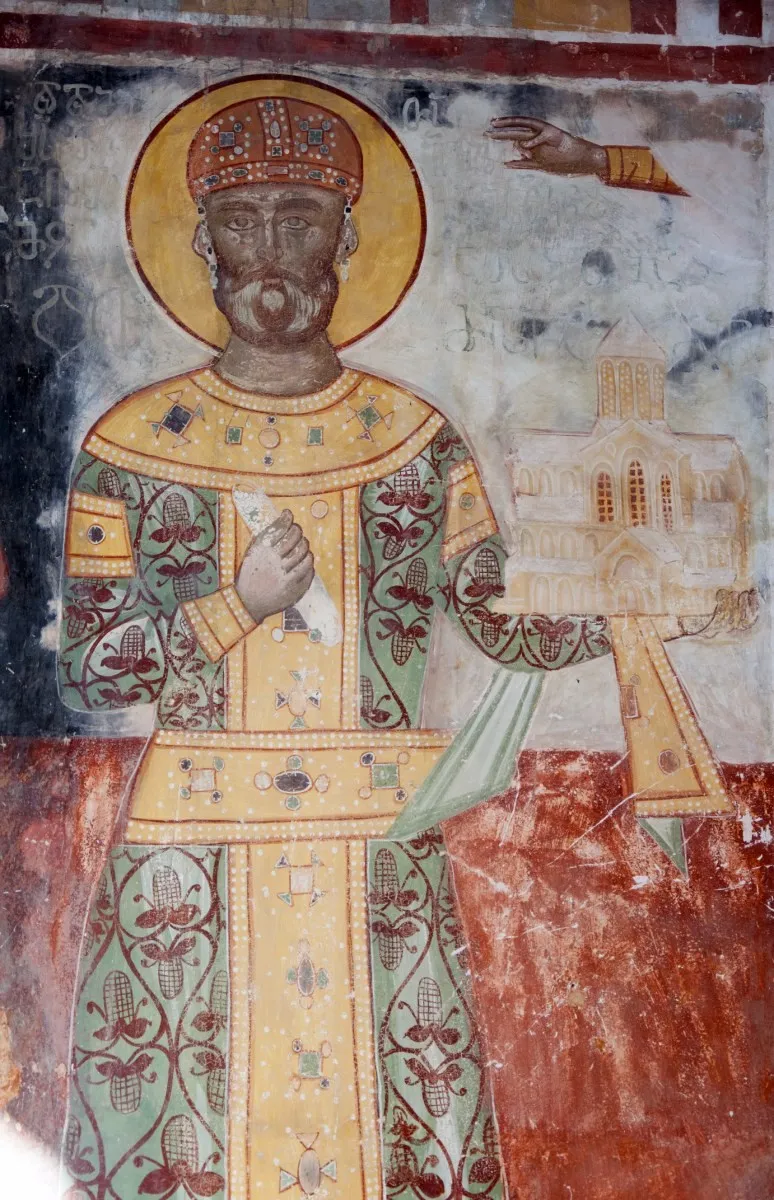
David IV came to the throne in 1089 at sixteen, in a country ravaged by Seljuk raids and torn apart by its own princes. Over thirty-six years of rule he put it back together: he subdued the unruly nobility, brought order to the Church at the council of Ruisi-Urbnisi in 1103, created a standing army and settled tens of thousands of Kipchak families in Georgia, who became his mainstay.
His greatest victory was the Battle of Didgori on 12 August 1121, where the Georgian army routed a far larger Seljuk coalition. A year later David took Tbilisi, an emirate for almost four centuries, and moved the capital there from Kutaisi. Georgia's Golden Age is usually counted from his reign, and he earned the epithet Aghmashenebeli, the Builder, for his monasteries, bridges, hospitals and schools.
In the fresco from Gelati, the monastery he founded, David appears in royal robes holding a model of the church, as founders are shown. Yet the portrait was not painted in his lifetime: an inscription in the church records that the murals were renewed in the first half of the 16th century, so the king's likeness reaches us in a later reading. The photograph was taken by an expedition of the National Archives of Georgia in 2015.
David died in 1125 and is buried at the south gate of Gelati, so that everyone entering steps on his slab; tradition says this was his own wish. In Georgian history he remains the king who did not merely wage war but gathered the country together, and his image with a church in his hands says better than any words how he is remembered.