Akaki Tsereteli
Poet and publicist
1840–1915
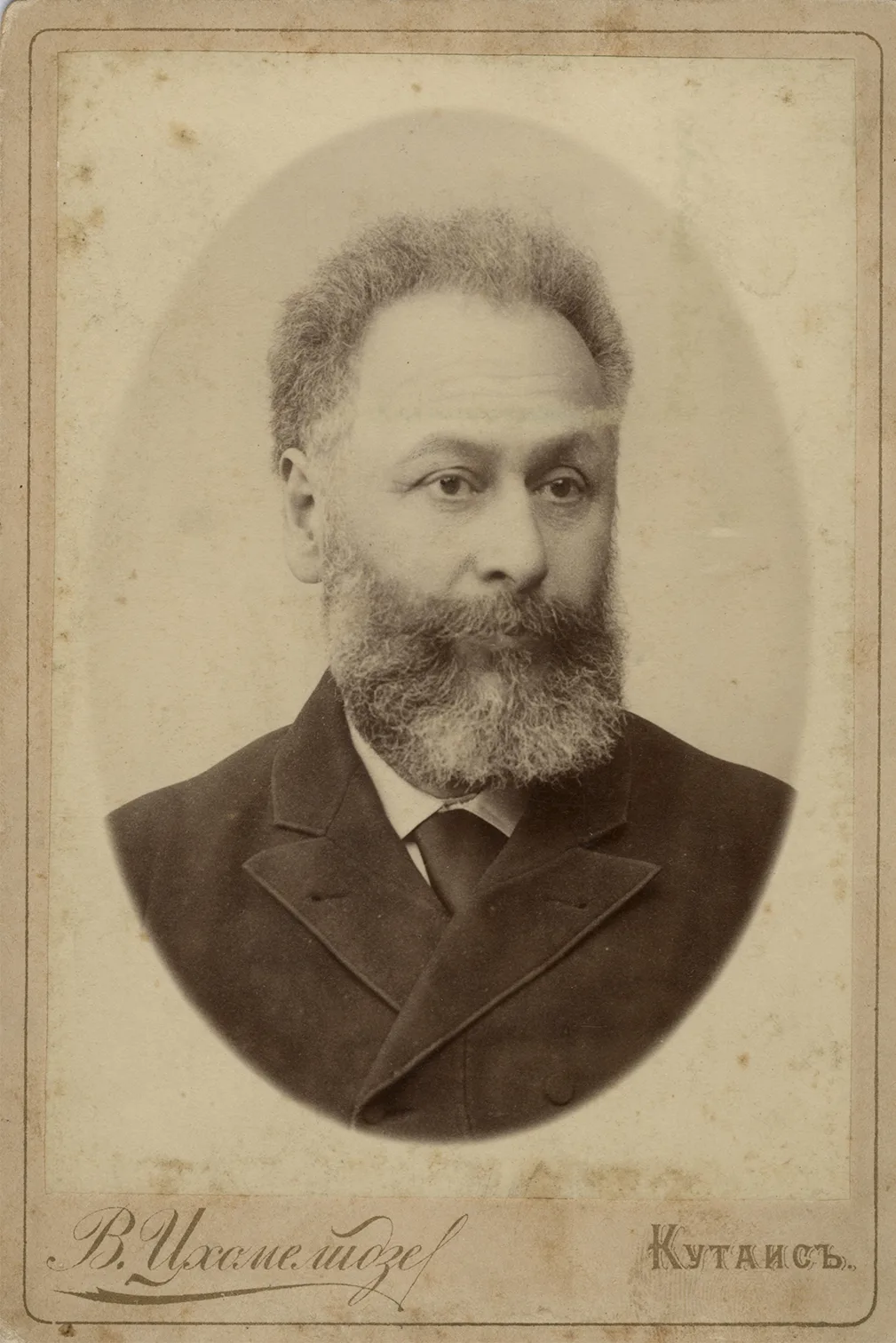
Akaki Tsereteli (1840–1915) was born in Skhvitori in Imereti into a family of counts, but spent his childhood with peasants in Savane, raised by peasant nurses. This, it is believed, is the source of the sympathy for peasant life heard throughout his verse. He graduated from the Kutaisi Classical Gymnasium and, in 1863, from the Faculty of Oriental Languages at St Petersburg University.
In the sixties Akaki grew close to Ilia Chavchavadze, and together they led a youth movement against Tsarist oppression, for Georgian culture and the people's right to decide their own fate. He wrote hundreds of patriotic, historical, lyrical and satirical poems, humorous stories and the autobiographical “The Story of My Life”, and was active in schooling, journalism and theatre. His words are sung in “Suliko”, perhaps the best-known Georgian song in the world.
He knew how to slip past the censor with allegory: in 1905, during the Russo-Japanese War, “Iveria” printed his allegorical poem in praise of Japan, and in 1906 he translated “The Internationale” into Georgian. Some of his fables also contain attacks on Armenians, and that too is part of his legacy. Akaki died on 26 January 1915 and is buried in the Mtatsminda Pantheon; one of Tbilisi's main boulevards and a metro station bear his name, and his portrait is printed on the ten-lari banknote.