Vazha-Pshavela
Poet of highland Georgia
1861–1915
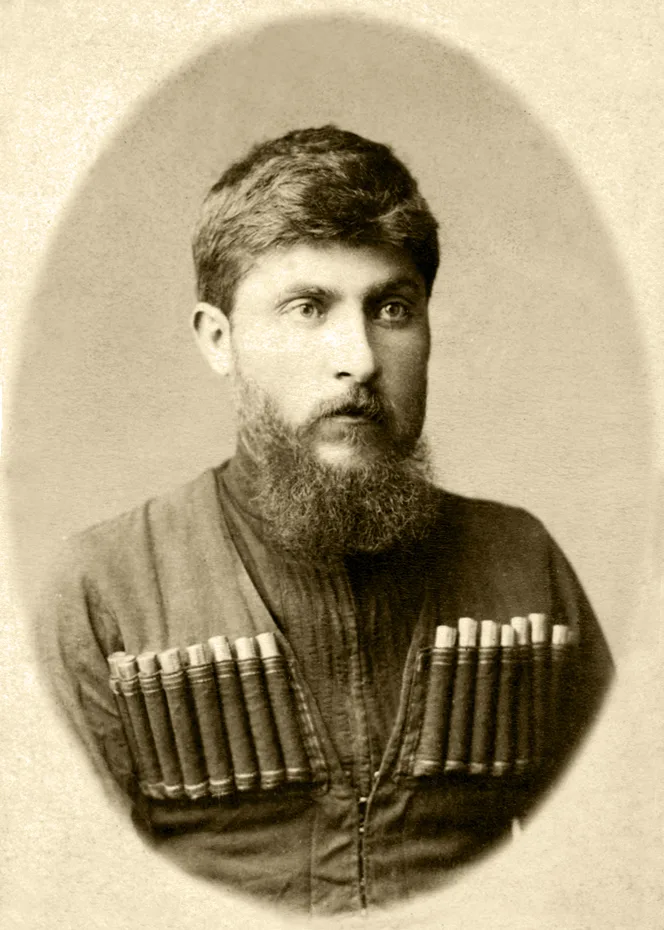
Vazha-Pshavela, “the man from Pshavi”, is the pen name of Luka Razikashvili (1861–1915). He was born into a priest's family in Chargali, in the mountain region of Pshavi in eastern Georgia, graduated from the Gori teachers' seminary in 1882 and enrolled as an auditor in the law faculty of St Petersburg University, but in 1884 lack of money brought him home. He taught Georgian and became a prominent figure in the national liberation movement.
From the mid-1880s Vazha wrote poems, plays and stories that capture the life and outlook of the Pshav highlanders with striking precision. His major epics, “Aluda Ketelauri”, “Host and Guest”, “Bakhtrioni” and “The Snake-Eater”, deal with the clash between the individual and the community and between humanity and nature, and in them mountain life rises to tragedy. The British scholar Donald Rayfield considers him a writer of a different magnitude from any other Georgian author.
Vazha idealised Pshav customs and the moral purity of the mountains, yet wrote that every true patriot is a cosmopolitan and every genuine cosmopolitan a patriot. His verse and prose have been published in more than twenty languages; in Russian he was translated by Pasternak and Zabolotsky. He died in Tbilisi in 1915 and is buried in the Mtatsminda Pantheon, and his house-museum stands in Chargali.