Nodar Dumbadze
Writer
1928–1984
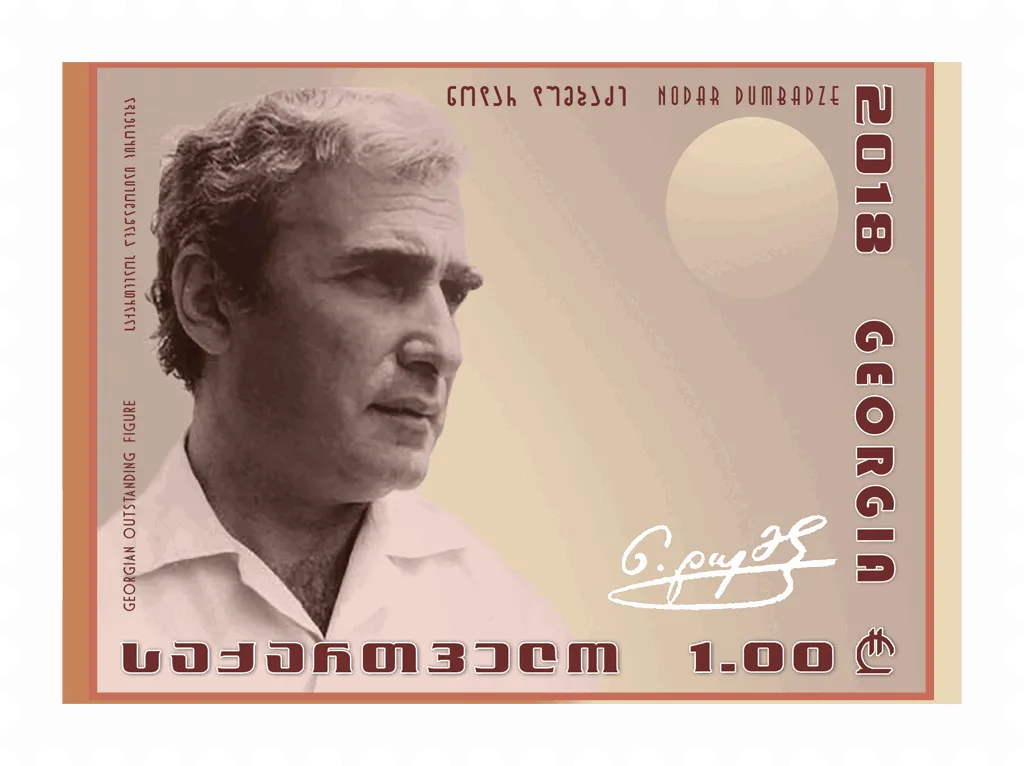
Nodar Dumbadze was born in Tiflis on 14 July 1928. In 1937 his father was shot and his mother arrested and sent to the camps, and the nine-year-old boy was left in the care of relatives: first in Abkhazia, then in the Gurian village of Khidistavi. He would later describe that village, without naming it, in the book his readers loved most, and today it has a museum of the writer.
He graduated from the Faculty of Economics at Tbilisi University in 1950 and worked there for a few years as a laboratory assistant, and from 1957 he gave himself entirely to literature. He began with humorous stories and worked at the journal Tsiskari, in the screenwriting department of Georgia-Film and at the satirical magazine Niangi, which he edited until the early seventies.
Fame came with the 1960 novel Me, Grandma, Iliko and Ilarioni: a Gurian village in wartime where only women and old men are left, the orphan Zurikela, his grandmother and two sharp-tongued but kind neighbours. Tengiz Abuladze made it into a film. Then came I See the Sun, The Sunny Night, about a son whose mother returns after twelve years of exile, Don't Be Afraid, Mother!, The White Banners and The Law of Eternity, for which he received the Lenin Prize in 1980. In his prose the comic always stands next to the bitter, and through the lyricism and melancholy shines a faith in people.
From 1981 until his death Dumbadze headed the Writers' Union of Georgia and was a deputy of the Supreme Soviet of the USSR. On his initiative the Mziuri children's park opened in Tbilisi in 1982. He died on 14 September 1984 and was buried in that park, and in 2009 his remains were moved to the Pantheon on Mtatsminda. For the writer's ninetieth birthday in 2018 Georgian Post issued a stamp with his portrait.