Zacharia Paliashvili
Composer
1871–1933
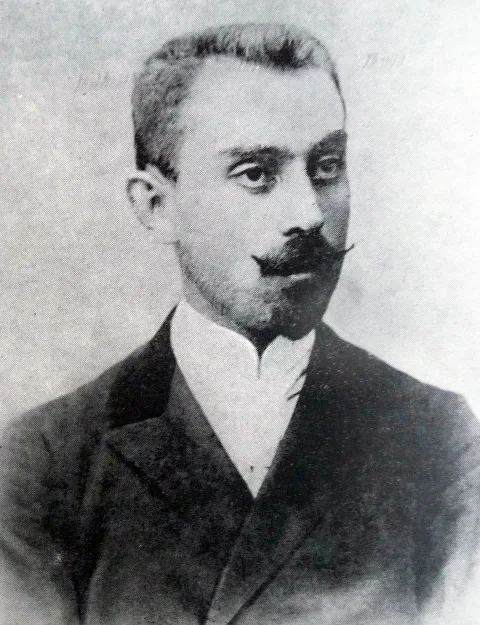
Zacharia Paliashvili (1871–1933) was born in Kutaisi into a large Catholic family and sang in a church choir as a boy. In 1887 the family moved to Tbilisi, where he worked as a church organist and chorister, learned the French horn and studied music theory, and from 1900 to 1903 he studied counterpoint with Sergei Taneyev at the Moscow Conservatory.
Back in Georgia he taught at the gymnasium for the nobility and at the Tbilisi Musical College, in 1908 helped open a music school under the Georgian Philharmonic Society, and in 1918 became director of the Tbilisi Conservatory. Travelling the country, he recorded and arranged Georgian folk songs. His music joins this folk material to the Romantic style of the 19th century, and he remembered Kutaisi as a town steeped in a “truly Georgian spirit”.
All three of his operas premiered in Tbilisi: “Abesalom and Eteri” in 1919, “Daisi” in 1923 and “Latavra” in 1928. “Abesalom and Eteri” is probably his best-known work, and he himself is regarded as one of the founders of Georgian classical music. Paliashvili died in Tbilisi on 6 October 1933 and is buried in the garden of the opera house, which took his name in 1937. Georgia's national anthem, “Tavisupleba”, that is “Freedom”, is based on his music, and his portrait is printed on the two-lari banknote.