Narikala Fortress, Tbilisi
The citadel above old Tbilisi, attested from the 4th century and rebuilt many times — the city's key defensive stronghold.
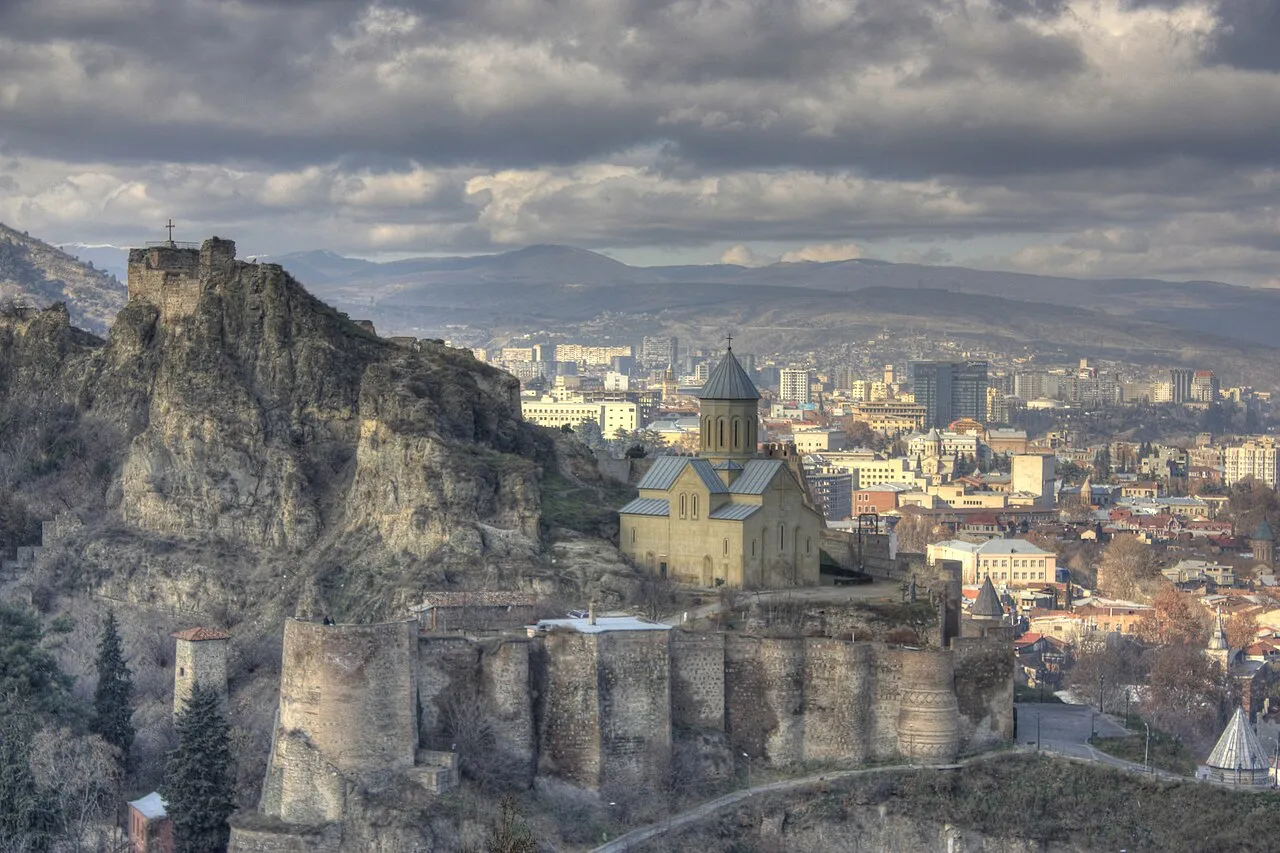
The fortress sits on the crest of the Sololaki ridge, above the sulphur baths of Abanotubani and the bend of the Mtkvari, and from whichever side you enter the Old Town, its walls come into view before the roofs. The first stronghold here dates from the second half of the 4th century. The Georgian chronicle says a Persian governor built it and called it Shuris-tsikhe, and envy is audible in the very name: the fortress was raised as a rival to Mtskheta, then the capital of Kartli.
From then on the fortress changed hands together with Tbilisi. The Arab emirs made it the city's main stronghold; David the Builder, after retaking the capital in 1122, enlarged and strengthened it; and most of the walls visible today were laid in the 16th and 17th centuries, when Persian and Ottoman garrisons took turns here. The name Narikala appears in the sources only in the 17th century and is derived from the Persian-Mongol Narin Qala, the little fortress.
Its military life ended in the 19th century, and it ended in ruin. The earthquake of 1827 brought down walls, bastions and most of the Istanbul Tower, and in 1847 a powder store exploded in one of the buildings, destroying almost everything left inside, including the old Church of St Nicholas.
The church seen in George Melashvili's photograph of 2011 was built in 1990–1997 on the foundations of its predecessor. So Narikala has two ages at once: walls that remember Persians and Ottomans, and a new church among them. Together they remain the point from which Tbilisi is first seen whole.