Samtskhe-Saatabago: the principality of the Jaqeli
Three and a half centuries on the southern frontier: marcher lords became atabegs, broke away from the Georgian kings and found themselves between the Ottomans and the Safavids.
1266
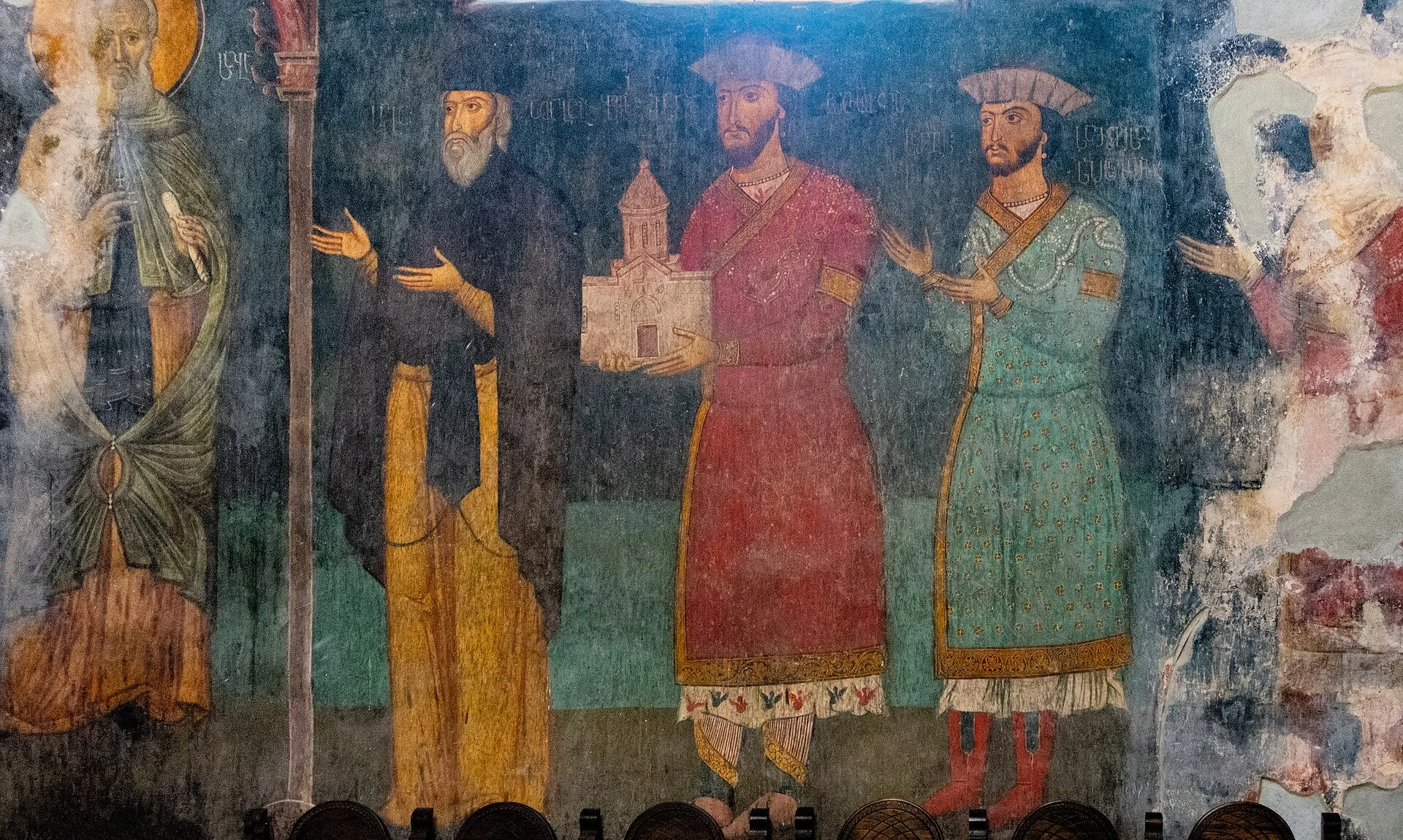
At the start of the thirteenth century the Jaqeli were one of many marcher houses in southern Georgia. It was the Mongol invasion that raised them. Ivane Jaqeli, prince of Samtskhe, was the only great Georgian noble to resist the conquerors, and he submitted only in 1238, with the consent of Queen Rusudan. Later Sargis Jaqeli rose against the Mongols together with King David Ulu, and then distinguished himself in the Ilkhans' war with the Golden Horde. In 1266, after a quarrel with the royal court, Samtskhe left the rule of the Georgian king and submitted to the Ilkhans directly.
Beka Jaqeli married one daughter to Alexios II, emperor of Trebizond, while another, Natela, became the wife of the Georgian king Demetrius II. Their son, the future George V, grew up at his grandfather's court in Samtskhe. In 1334 George brought the principality back under the crown and granted the Jaqeli the title of atabeg, that is, tutor to the king. From that title comes the name Saatabago, the domain of the atabegs.
In 1465 Qvarqvare II Jaqeli defeated King George VIII by Lake Paravani and broke away for good. Independence meant living between powerful Muslim neighbours: the Aq Qoyunlu Turkmens attacked the principality, and from 1479 the Ottoman Empire began to press on its lands. In 1535 Bagrat III, king of Imereti, defeated and captured the atabeg at Murjakheti and annexed Samtskhe, but the captive's son called in the Ottomans. As a political entity the principality ceased to exist in 1625. Portraits of its first rulers survive on the walls of the Sapara monastery near Akhaltsikhe.