Sapara: the monastery of the atabegs
The Church of St Saba in a wooded gorge near Akhaltsikhe: one of the finest Georgian churches of the thirteenth century, with frescoes portraying the Jaqeli.
1290
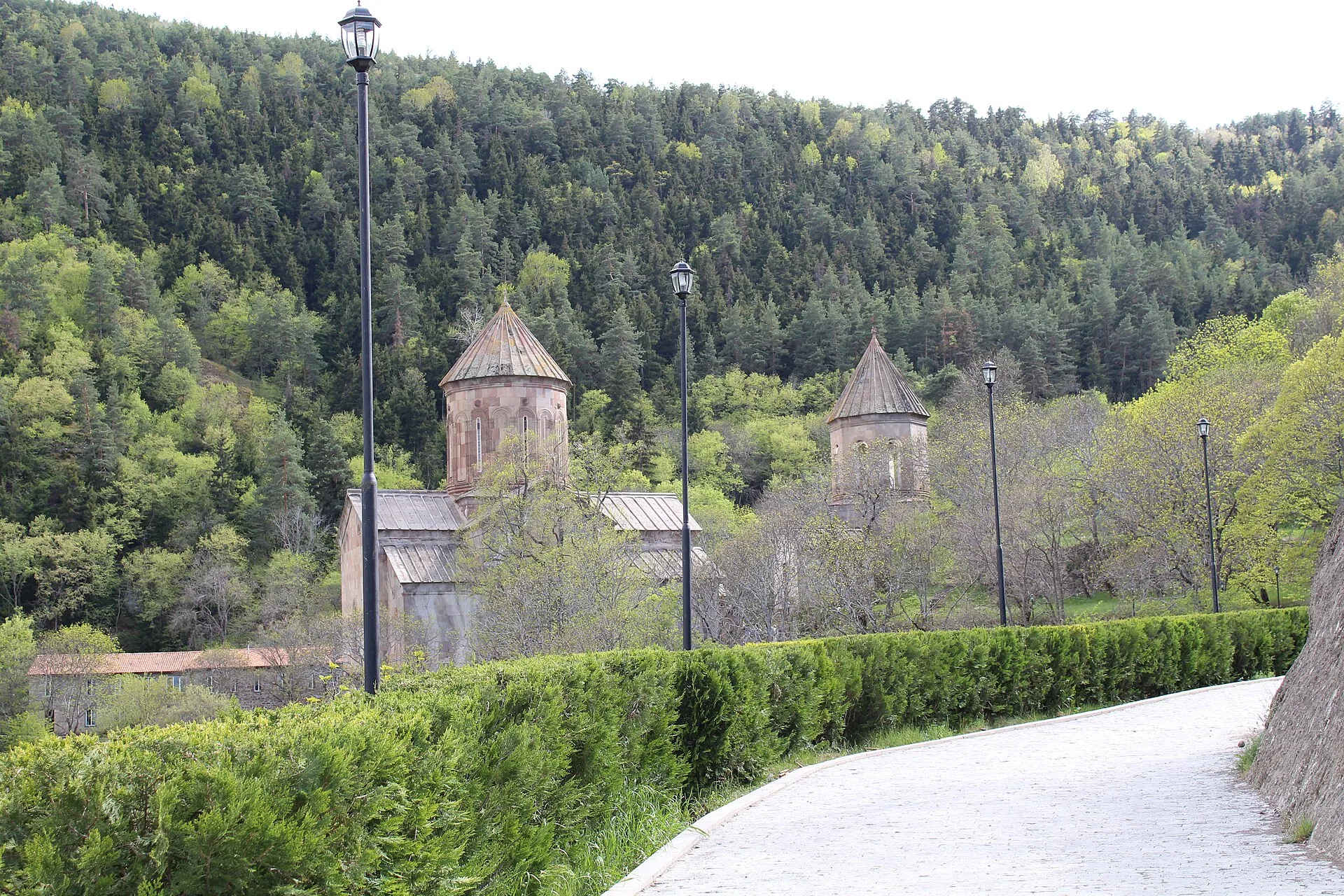
The monastery of Sapara is hidden in a wooded gorge not far from Akhaltsikhe. It has existed since at least the ninth century, and the oldest of its churches, the hall church of the Dormition of the Mother of God, was built probably in the tenth. At the end of the thirteenth century the monastery passed to the Jaqeli, rulers of Samtskhe.
Sargis Jaqeli knew how to stay on good terms with the Mongols, and under him Samtskhe lived more peacefully than the rest of the country. In old age he took monastic vows under the name Saba. His son Beka built here the largest of the monastery's twelve churches and dedicated it to St Saba, whose name his father had taken. The name of the architect is carved on the arch of the western window. The church is a cross-in-square, faced with reddish-violet stone. The drum of the dome has sixteen windows, eight real and eight false, a device that later became common in Georgia.
The walls were painted in the fourteenth century. In the lowest register of the south wall, next to St Saba, stand the rulers of Samtskhe: Sargis I, Beka I, Sargis II and Qvarqvare. Sapara's bell tower is considered one of the oldest in Georgia. From the end of the sixteenth century, when the Ottomans came to Samtskhe, the monastery stood empty, and its icons and church plate were carried off to safer parts of the country.