Georgia's two subtropics
How the humid Black Sea coast and Colchis differ from the warm corner of Kakheti around Lagodekhi.
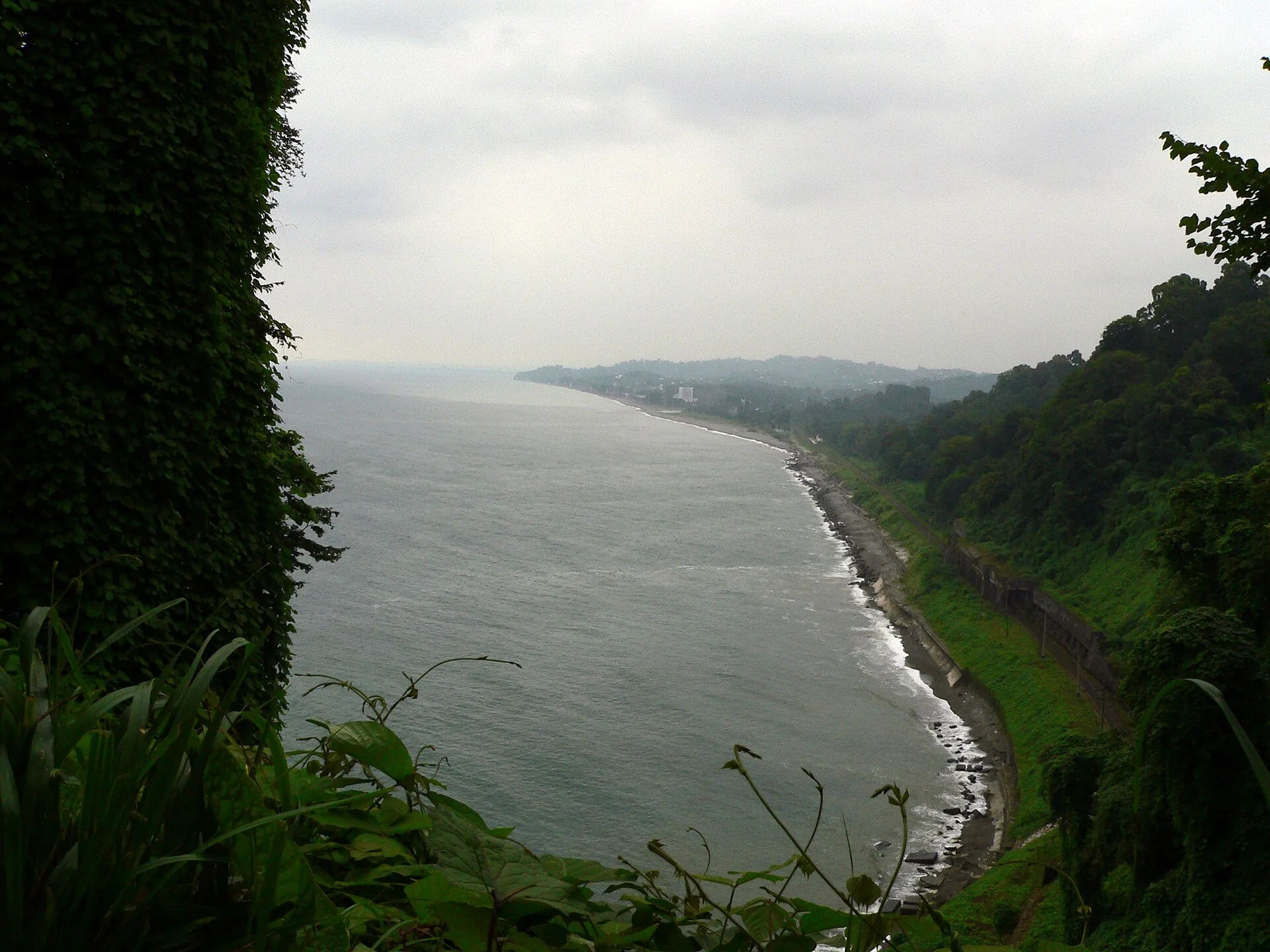
Georgia is often called a land of subtropics, but it has two of them, and they are not at all alike. The Greater Caucasus shields the country from cold northern air, while the Likhi, or Surami, Range divides it into west and east. From the west the warm, moist air of the Black Sea flows freely into the lowlands, from the east the continent breathes, and the climate is decided by distance from the sea and by altitude.
The western subtropics cover the Black Sea coast from Abkhazia to the Turkish border and the Colchis Lowland. It is humid and rainy here: one to two thousand millimetres of rain a year, and around 2,500 in Batumi. In the west the subtropical climate holds up to about 650 metres above sea level; palms and citrus, tea and mandarins grow here, in Soviet times the drained lowlands were turned into subtropical plantations, and in 2021 the Colchic rainforests and wetlands were inscribed on the UNESCO World Heritage List.
The eastern subtropics are far more modest and hide in one corner of Kakheti, around Lagodekhi, beneath the southern slopes of the Greater Caucasus. The climate here is moderately humid subtropical, the mean annual temperature about thirteen degrees, the plain gets 650 to 1,080 millimetres of rain and the mountains up to 1,800, markedly less than in the west, and hail and drought are common. Botanists compare the lower beech, hornbeam and maple forests of the Lagodekhi reserve with the warm forests of the Black Sea coast, but there are no palms or citrus here.
As it happens, both subtropics found their guardians in the same year, 1912. In the west, on the Green Cape near Batumi, the botanist Andrei Krasnov laid out the Batumi Botanical Garden, and in the east the tsar's viceroy in the Caucasus approved the Lagodekhi reserve, the first in the Caucasus region.