Benia Chkhikvishvili
The “Gurian president”, mayor of Tbilisi
1880–1924
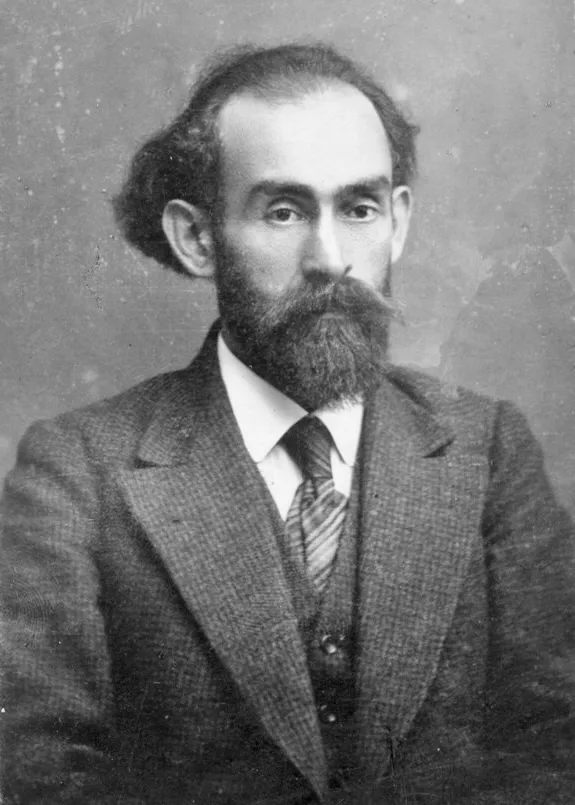
Beniamin Chkhikvishvili, known to everyone simply as Benia, was born on 15 January 1880 in the Gurian village of Sakvavistke, into a poor noble family. He was expelled from the Kutaisi agricultural school a year before graduating for joining underground circles, and he went over to the Social Democrats: he worked in the factories of Batumi and in a manganese mine at Chiatura, taught school in Mingrelia, and soon became one of the leaders of the Batumi workers, a brilliant orator. In 1905 the party sent him to Guria, where a peasant uprising was already under way. He distributed kerosene and food, trains ran on his orders, and the Gurian parliament convened on his initiative elected him chairman with 958 votes out of 970. Contemporaries called him the “Gurian president” and even the “Gurian king”.
In 1906 a Cossack patrol seized him in the village of Aketi. The trial was moved to Odessa because the defendants’ speeches stirred people up, and in 1908 Benia was sentenced to four years of hard labour. From prison he sent his sister a famous photograph: he sits sprawled in a polka-dot shirt while tsarist soldiers stand behind him with rifles. Then came exile in Siberia, where he worked as an agronomist, and he could return home only after the revolution of 1917. In the First Republic he was sent wherever things were hardest: he was mayor of Sukhumi and the government’s commissioner in Abkhazia, in 1919 he became mayor of Tbilisi and fought speculation and cholera and helped collect Pirosmani’s paintings, and in 1920, as governor-general, he restored order in newly annexed Batumi. He had a fiery temper, and in the Constituent Assembly it came to fistfights.
After the Soviet invasion of 1921 Benia emigrated: in Istanbul he headed the refugee commission, in France he worked as a driver and as a painter on the restoration of Reims Cathedral, and together with Nikoloz Jakeli he was the formal owner of the Leuville estate where the government in exile lived. In May 1924, ill with his lungs and doubting that the uprising was right, he nevertheless returned to Georgia to prepare the uprising. On 25 June he was arrested, and on 30 August Dzerzhinsky ordered him shot without trial. Benia was killed in Russia, at an unknown station on the way from the Suzdal isolation prison, and where he is buried is unknown. Today a street in Tbilisi and a square in Chokhatauri bear his name, and in 2023 a bust of him was put up in Ozurgeti.