Samegrelo-Zemo Svaneti
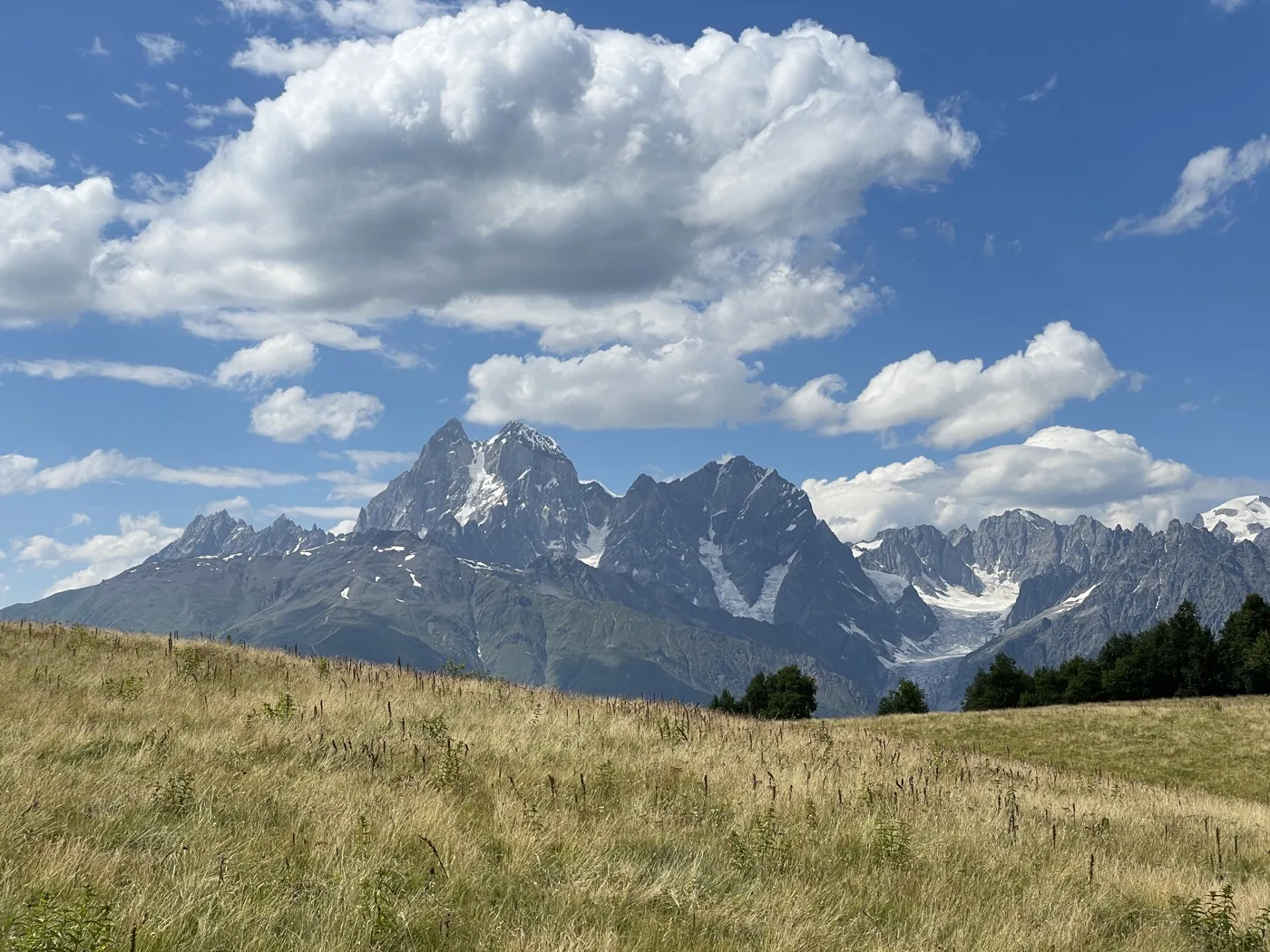
The west: lowland Samegrelo (Megrelian cuisine, Ojaleshi wine) and highland Upper Svaneti with the towers of Mestia.
Samegrelo-Zemo Svaneti unites two very different historical provinces: lowland Mingrelia (Samegrelo) on the Black Sea, between the Enguri, Rioni and Tekhuri rivers, and highland Upper (Zemo) Svaneti at the foot of the Caucasus range, home to Mount Shkhara, Georgia's highest peak (5,193 m).
Zemo Svaneti was, for centuries, almost cut off from the rest of the world by mountain passes, and that isolation preserved unique 9th–12th-century stone defensive towers and the distinct Svan language; the towers of Mestia and Ushguli are on UNESCO's World Heritage List (1996).
Mingrelia, meanwhile, was the seat of the princely Dadiani house, which ruled the province as its own principality from the 16th century until 1867, and is one of Georgia's rainiest, greenest regions, with Colchic forests and rich botanical diversity.
Svan dress is one of the most recognisable in Georgia, thanks to its famous felt hat: grey, with black cross-shaped seams (recalling the Svan greeting “may the cross protect you”), felted from 200 g of sheep's wool over some 30 hours of work. The hat is worn by men only, while women are traditionally forbidden to make or wear it, with rare exceptions for respected craftswomen.
The men's costume was completed by a shirt, chokha and trousers; women wore a woollen dress and a headdress with earrings and jewellery, and in wealthier families a silk shirt and velvet cloak.
What to see
- Martvili CanyonThe canyon is cut by the Abasha river near Martvili, by the village of Gachedili, which is why it is also called the Gachedili Canyon. It runs for almost two and a half kilometres, and its walls rise in places to forty metres, thick with moss and ferns, with waterfalls dropping into emerald water. The Dadiani princes of Mingrelia used to bathe here, and today's trail of about seven hundred metres follows their old route, with footbridges and viewing platforms. Down in the canyon visitors are taken out in boats: a short trip of some three hundred metres leads between sheer walls to places you cannot reach on foot. In 2016 the paths, bridges and boats were renewed, and the visitor centre was set up in the neighbouring village of Inchkhuri. Together with the Okatse Canyon it is the most popular nature trip from Kutaisi.
- Dadiani PalaceThe palace ensemble in Zugdidi was the residence of the Dadiani rulers of Mingrelia. The first buildings went up in the 17th century, and the main palace in its present form, neo-Gothic with echoes of Georgian, Russian, Eastern and Tudor architecture, is credited to the English architect Edwin Race. The palace became a museum on 1 May 1921 through the efforts of the ethnographer Akaki Chanturia, but the collection had been started as early as 1840, when Prince David Dadiani put on display finds from the excavations of ancient Nakalakevi. Today it holds about 41,000 items, among them the icon of Queen Burdukhan, Tamar's mother, and manuscripts of the 13th and 14th centuries. A particular pride is the objects connected with Napoleon: they were brought to Georgia by Achille Murat, grandson of the emperor's sister Caroline, who married Salome Dadiani. The Zugdidi Botanical Garden is laid out around the palace.
- Enguri DamThe dam of the Enguri hydroelectric station blocks the Enguri gorge near the village of Jvari and rises 271.5 metres; it is the second highest concrete arch dam in the world. Construction began in 1961, the station partly went into operation in 1978 and was completed in 1987. With 1,300 megawatts and twenty turbines it generates on average about four terawatt-hours a year, a large share of all Georgia's electricity. Its layout mirrors the history of the region: the dam itself stands on territory controlled by Georgia, while the power house, reached by water through a tunnel, is in the Gali district of Abkhazia. Under a 1992 agreement Abkhazia receives forty per cent of the energy and the rest of Georgia sixty, one of the few things the two sides still do together. Above the dam a reservoir spreads among the mountains of Svaneti.
- MestiaMestia lies at about fifteen hundred metres in the upper Enguri valley and is the main town of Upper Svaneti; it became an urban-type settlement in 1968, and about two thousand people live here, most of them Svans. Above the houses stand Svan towers, built of stone beside the dwellings and enclosed by walls: families sheltered in them from raids and blood feuds. The medieval churches and towers of Mestia are part of the UNESCO World Heritage site Upper Svaneti. The museum of history and ethnography keeps icons and manuscripts that were hidden in the mountains from invaders for centuries, and a house museum tells the story of Mikheil Khergiani, the famous mountaineer who was born here. Mestia has an airport named after Queen Tamar, and the four-day trail to Ushguli starts here.
- UshguliUshguli is a community of five villages at the head of the Enguri valley, at about 2,100 metres, beneath Shkhara, the highest summit in Georgia. It is one of the highest continuously inhabited settlements in Europe: about two hundred people live here, snow covers everything for half the year, and the road to Mestia is often impassable. Above the houses rise Svan towers, built mostly between the 9th and 12th centuries, where families sheltered from raids and blood feuds. In the village of Zhibiani stands the 12th-century Lamaria church with Golden Age frescoes. Since 1996 Ushguli, together with all of Upper Svaneti, has been on the UNESCO World Heritage list, and time here seems to have moved less than anywhere else in Georgia.