Gelati Monastery
Founded by David the Builder in 1106; a centre of learning and UNESCO World Heritage site, famed for its mosaics and frescoes.
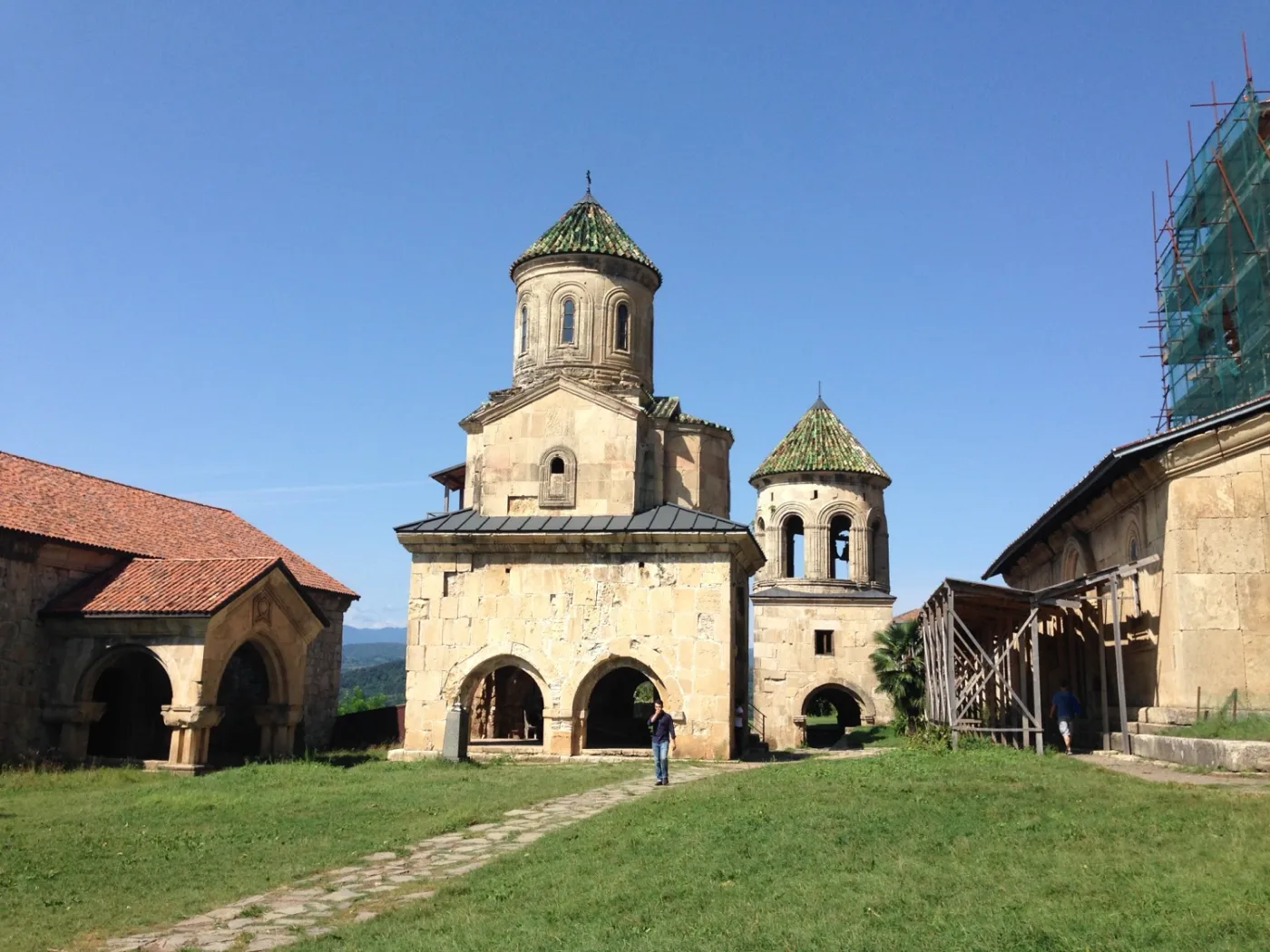
Gelati spreads over a hillside a few kilometres north-east of Kutaisi. David IV began building it in 1106, and the monastery was conceived not only as a cloister but as a school. Around it grew the Gelati Academy, where manuscripts were copied and philosophers translated and explained.
Ioane Petritsi, famous for his commentaries on Proclus, worked here, as did Arsen Ikaltoeli, a theologian much indebted to Aristotle. The main church, dedicated to the Nativity of the Virgin, keeps a 12th-century mosaic: in the conch of the apse, the Virgin and Child between archangels, one of the finest mosaics of the whole Christian East.
David the Builder is buried at the south gate of the monastery, under a slab that everyone entering must cross; tradition holds that he asked to lie there so that people would tread on him. Nearby stand the Gates of Ganja, carried off as a trophy by his son Demetrius I in 1138. The churches of St George and St Nicholas were added in the 13th century, and the murals of the main church have been renewed more than once.
In 1994 Gelati was inscribed on the UNESCO World Heritage list together with Bagrati Cathedral in Kutaisi. Bagrati was removed in 2017 after its reconstruction, while Gelati remained, and rightly so: here Georgia's Golden Age survives not in retelling but in stone, in glass tesserae and in the grave of the king himself.